AI & Automation
How to Get Cited by AI Answer Engines
For twenty years the job was to rank. Now a growing share of questions get answered without anyone visiting a result at all — the engine reads the pages, writes a summary, and cites two or three…
In short
Being the page an AI cites is a different problem from being the page that ranks. It rewards self-contained passages, claims with sources attached, and facts about you that agree across every property you control — and it punishes vagueness harder than search ever did. Attribution is still poor, so treat it as an investment in being findable and accurately described, not as a channel with a cost per acquisition.
For twenty years the job was to rank. Now a growing share of questions get answered without anyone visiting a result at all — the engine reads the pages, writes a summary, and cites two or three sources underneath it. Being the page that gets cited is a different problem from being the page that ranks first, and it needs different work.
This is what that work actually is, and how to tell whether it is doing anything.
What changed, in one paragraph
A search engine matches a query to pages and orders them. An answer engine reads a set of pages, extracts the parts that answer the question, and synthesises a reply. The second process cares about things the first mostly did not: whether a passage stands on its own, whether a claim carries a source, whether your page contradicts itself, and whether the same facts about you appear consistently everywhere else.
That is not a new discipline so much as an old one with the slack taken out. Pages that were vague enough to rank are not specific enough to quote.
Write passages that survive being lifted
An answer engine does not quote your article. It quotes a chunk of it, stripped of everything around it.
So the unit that matters is the self-contained passage. A paragraph that begins "As discussed above, this means…" is unusable — the engine cannot include the part it depends on, so it takes something else. A paragraph that names its subject, states its claim and finishes the thought can be lifted whole.
Practically:
- Answer the question in the first sentence, then justify it. Not the other way round.
- Repeat the subject rather than leaning on "it" and "this" across paragraph boundaries.
- Keep one idea per paragraph. Two ideas fused together get quoted badly or skipped.
- Put the conclusion near the top of the page, not only at the bottom. Opening content is weighted heavily, and a reader who reads nothing else should still leave with the answer.
Question-and-answer format is the most liftable structure there is
A question with its answer directly beneath it is already the shape an answer engine is looking for. It needs no context, it cannot be cut in the wrong place, and the question itself often matches the query almost exactly.
This is why a genuine FAQ section outperforms the same information written as prose — not because of the markup, but because the format forces each answer to stand alone. The markup helps a machine find it; the structure is what makes it quotable.
Write the questions people actually ask, in the words they use. "How much should I spend on Google Ads?" not "Budget considerations". Then answer each in a way that would make sense to someone who never sees the rest of the page.
Structured data is a hint, not a lever
Marking up your FAQs, articles, products and organisation gives a machine an unambiguous read of what your page contains and who published it. It is worth doing properly.
It is not a ranking trick, and it will not rescue a page that says nothing. Two rules keep it useful:
Only mark up what is actually on the page. Structured data describing content a visitor cannot see is a violation, and the penalty is worse than the omission.
Do not emit empty or partial nodes. An FAQPage with no questions in it is a structured-data error rather than a neutral omission — it tells the machine you have something you do not have.
The identity problem is the one most people ignore
Answer engines try to resolve entities: who is this person or company, what are they known for, and do the sources agree?
If your website says you have eighteen years of experience, your company profile says fifteen, and a PDF you published says something else again, you have not given the engine three data points. You have given it a reason to trust none of them and cite somebody whose story is consistent.
This is the least glamorous work in the whole discipline and probably the highest return:
- One set of facts — founding year, experience, headline figures — used identically on every property you control.
- One canonical home per entity. Two live domains for one company splits the signal rather than doubling it.
- Credentials stated in a checkable form: the certification name, the date, the ID.
- Profiles that link to each other, so the cluster is traversable.
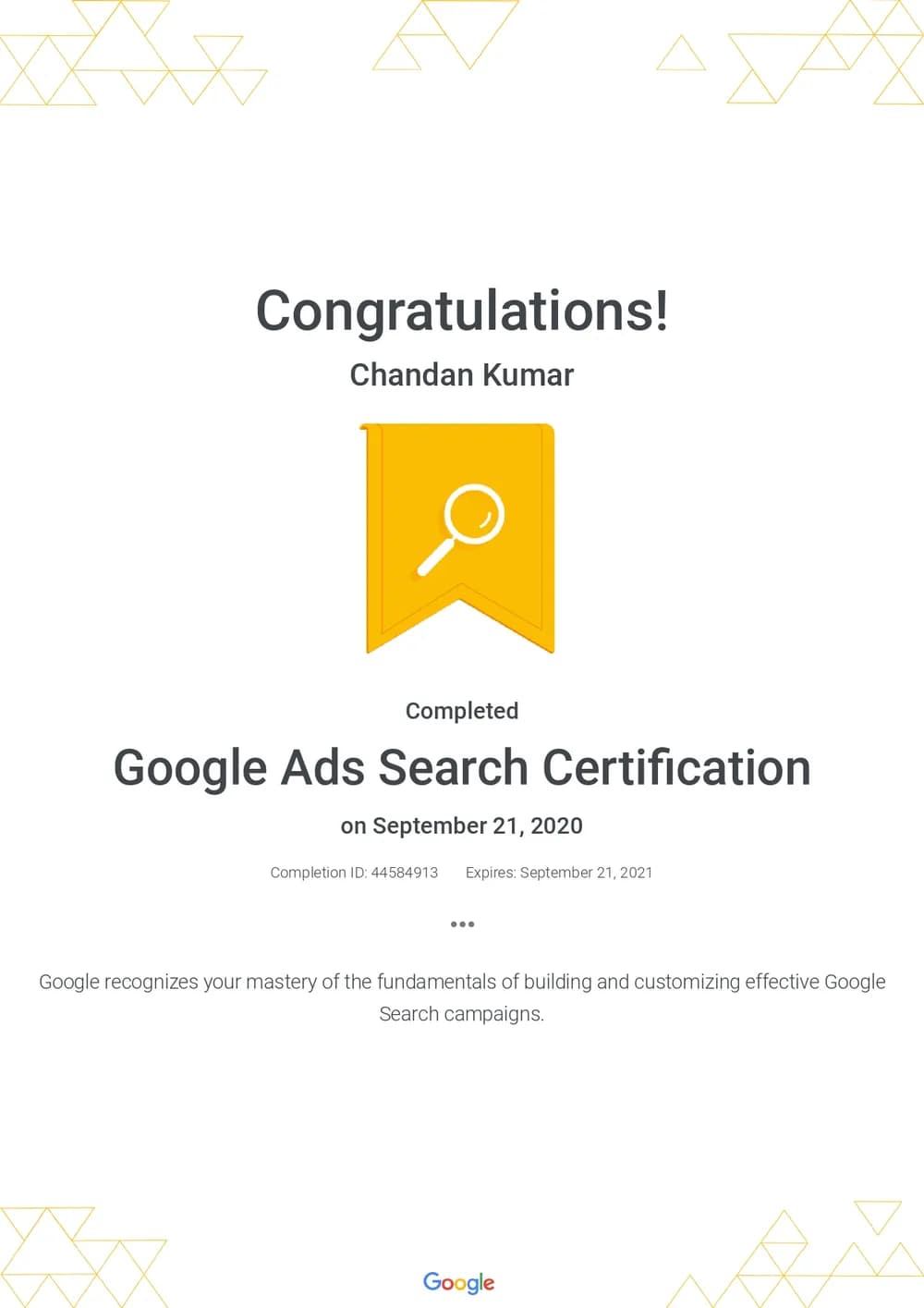
I publish my certifications with their completion IDs and every case study figure with a link to where it was originally published, precisely because both are checkable. That is not a stylistic choice; it is the format that survives verification.
Sources beat adjectives
A claim with a source attached is quotable. A claim without one is a liability, because the engine cannot verify it and increasingly will not repeat it.
This cuts against how most marketing copy is written. "Industry-leading results" is unciteable — there is nothing to check. "Cost per lead fell from ₹850 to ₹308 between March and May 2026, published here" is citeable, because every part of it can be verified by someone who cares to.
The practical test: for each factual sentence on a page, could a sceptical reader confirm it without contacting you? If not, either attach the evidence or delete the sentence.
What to actually do, in order
- Fix contradictions across your own properties first. Nothing else works while the sources disagree.
- Add a real FAQ to your most important pages, written in the language people search with.
- Rewrite openings so the conclusion appears near the top of each page.
- Attach sources to every figure you publish, or remove the figure.
- Mark up what is genuinely there — organisation, author, article, FAQ.
- Then, and only then, worry about volume.
Measuring it honestly
This is where most of the advice in circulation gets uncomfortable, so here is the honest position: attribution for answer-engine visibility is poor, and anyone claiming precise measurement is overstating.
What you can do:
- Ask the engines directly. Query the questions your buyers ask and record what comes back, who is cited, and whether the summary describes you correctly. Repeat monthly. It is manual and it is the most reliable signal available.
- Watch referral traffic from AI assistants in your analytics. Volumes are typically small; the pattern over time matters more than the absolute number.
- Watch branded search. Someone who reads about you in a generated answer and then searches your name is a real effect that shows up in ordinary reporting.
- Ask new enquiries how they found you. Crude, unfashionable, and it catches things analytics cannot.
What you cannot yet do is attribute revenue to a citation with any confidence. Plan the work as an investment in being findable and accurately described, not as a channel with a cost per acquisition.
The part that has not changed
None of this replaces having something worth citing. An engine summarising six pages that all say the same generic thing will cite whichever it trusts most, and trust is built from specificity, consistency and evidence — the same three things that made a page worth reading before any of this existed.
The businesses that do well here will mostly be the ones that were already publishing checkable, specific, non-contradictory material. The new part is that the cost of being vague went up.
A note on dates: the mechanisms above are stable, but the specifics of how each engine surfaces and attributes sources change frequently. Treat any article naming particular tools or interfaces — including this one — as needing a check against current behaviour before you act on the detail.
Frequently asked
What is answer engine optimisation?
Work that makes your pages usable as a source when an AI system answers a question, rather than only rankable in a list of links. In practice it means writing self-contained passages, attaching sources to claims, marking up what is genuinely on the page, and making sure the facts about you agree across every property you control.
Is AEO different from SEO?
It is the same discipline with the slack taken out. A search engine matches a query to pages and orders them; an answer engine reads pages and synthesises a reply. The second cares whether a passage stands on its own, whether a claim carries a source, and whether your sources contradict each other — things a page could previously rank without.
Does structured data make an AI cite me?
No. Structured data gives a machine an unambiguous read of what your page contains, which helps it find and classify the content. It cannot rescue a page that says nothing specific, and marking up content a visitor cannot see is a violation rather than a shortcut.
How do I measure whether it is working?
Imperfectly, and anyone claiming precise attribution is overstating. Query the questions your buyers ask and record who gets cited, monthly. Watch referral traffic from AI assistants and movement in branded search. Ask new enquiries how they found you. Revenue attribution for a citation is not reliably possible yet.
What matters most if I only do one thing?
Fix the contradictions between your own properties. If your website, company profile and published documents state different founding years or different headline figures, you have not given the engine three data points — you have given it a reason to trust none of them and cite somebody whose story is consistent.
- AEO
- AI Search
- Structured Data
- Entity SEO
Next step
Score your account
Twenty questions across tracking, structure, landing pages and bidding. You get a score and a prioritised list of what to fix first.